
Set Review ➟ 42239 Batmobile Tumbler
Many famous iconic vehicles have been driven by various pop culture heroes and villains over the decades. There’s Mr. Bean’s famous Mini. Then there is an entire collection of James Bonds’ crazy cars equipped by the eccentric Q. For the fans of the 80’s, let’s mention the Knight Rider’s KITT (which was portrayed as a character itself, actually), or the white Ferrari Testarossa from Miami Vice. And then, there’s the Batmobile Tumbler. A child of a tank and a Lamborghini Countach, it too belongs to the category of easily recognizable vehicles which contribute a lot to the legendary status of their owner, and are a part of Batman’s overall mythos, no doubt.
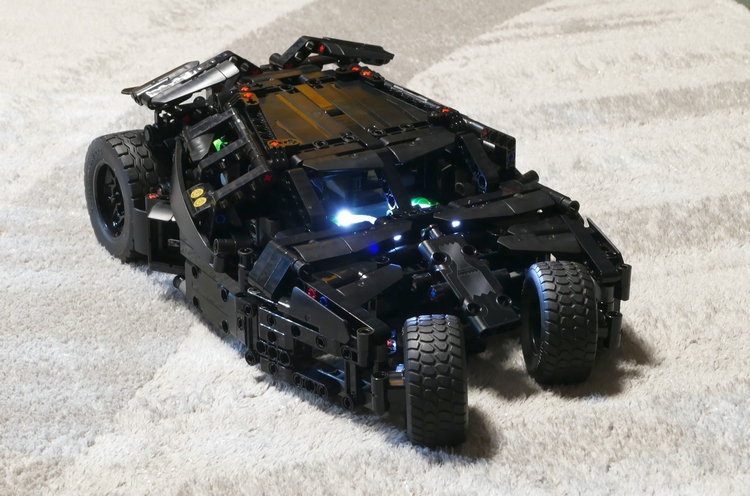
With such reputation of the Tumbler, launching its official set is a safe bet for LEGO, regardless of the theme and the era. Or I should rather say, it has been a safe bet because, according to my count, there have so far been eight Tumbler sets, though it wasn’t the main and the only star in each one. The two most widely known are the flagships from 2014 and 2021, with around 2000 parts each.
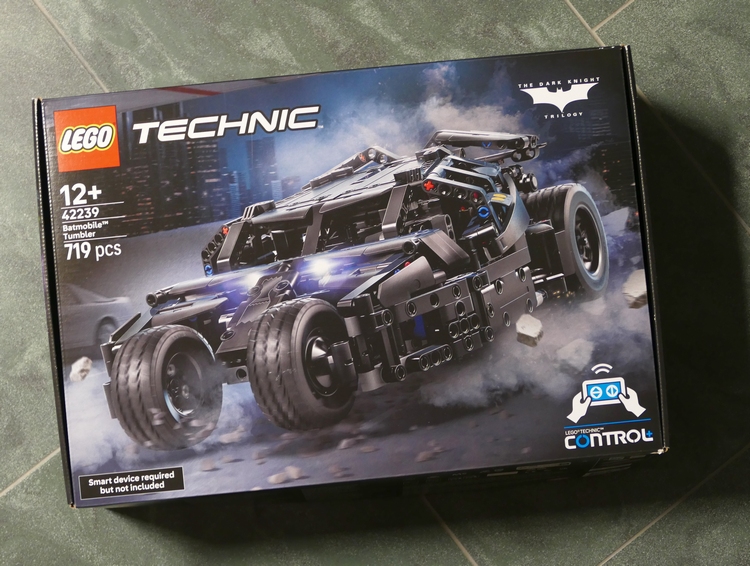
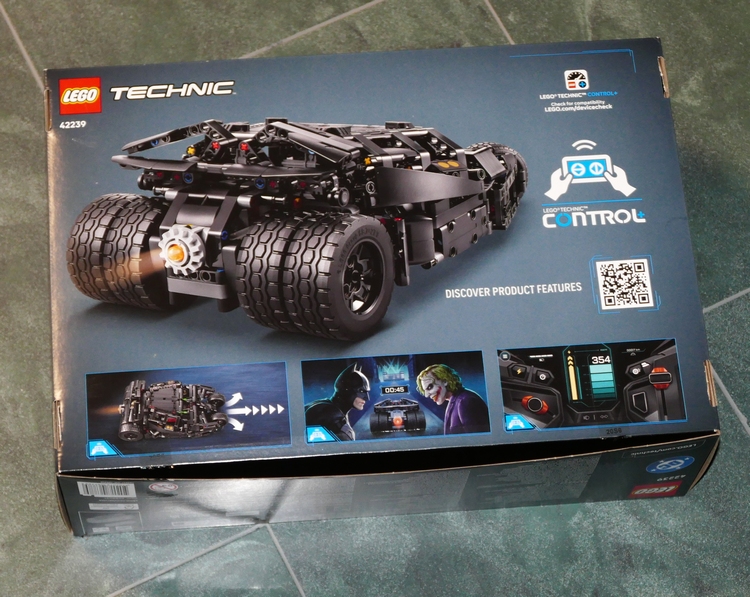
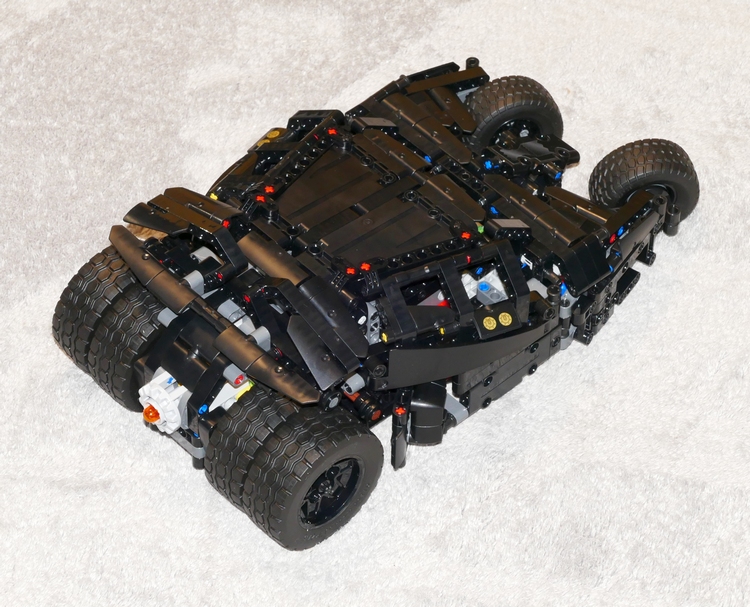
In this new, ninth LEGO Tumbler reincarnation we now got, the theme choice went in the Technic direction. My first reaction was that it may be a very good fit, considering the mechanicality of the Tumbler. The second one was that its unusual shape, to say the least, could allow or even encourage some interesting mechanical features. Actually, just a glance at the box is enough to discern the Tumbler’s main feature: electr(on)ics and motorization, as indicated by the Control+ logo.
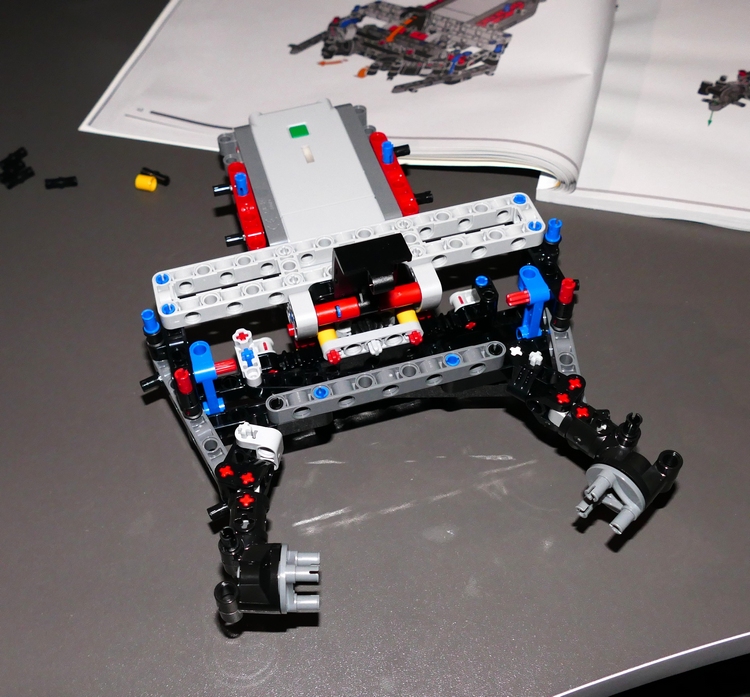
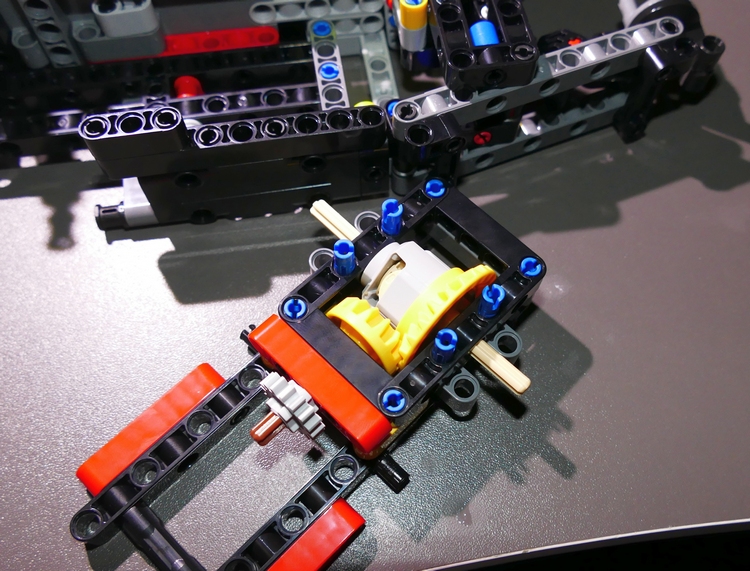
But before we get to that, a word or two on construction, which draws attention right from the start. The very particular way the Tumbler’s front is designed implies just as particular kinematics of its steering, and that exactly is the main mechanical curiosity of this set. A rack-and-pinion setup linked to a sliding beam via a Z-linkage, which furthermore rotates individual steering arms! It works well in practice, even with some inevitable backlash between those many stages of linkages - although some if it is held under control by using friction pins for pivoting. Interesting, and pretty ingenious, too.
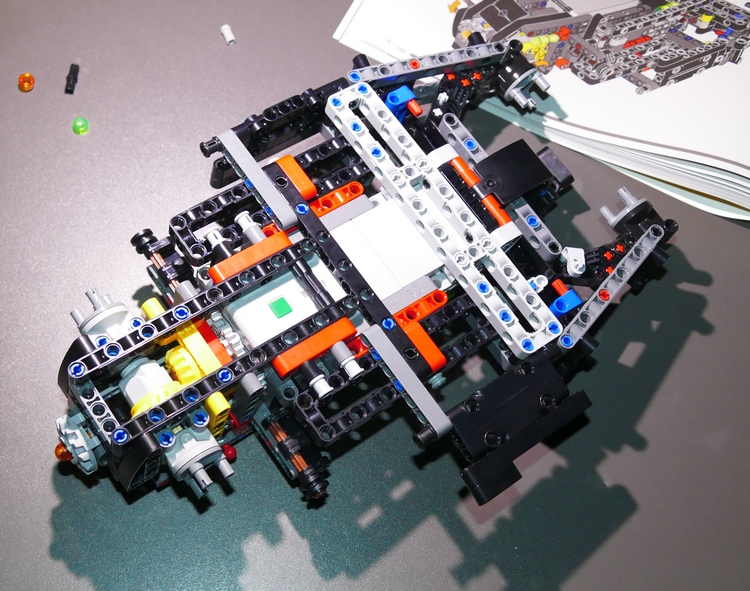
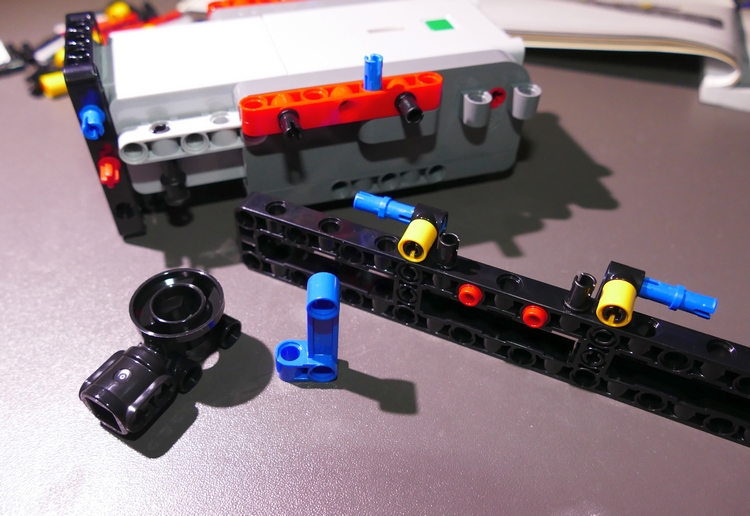
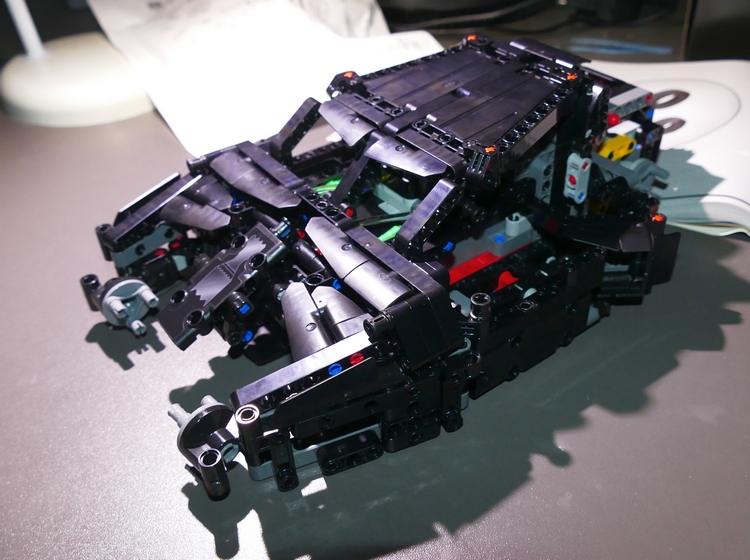
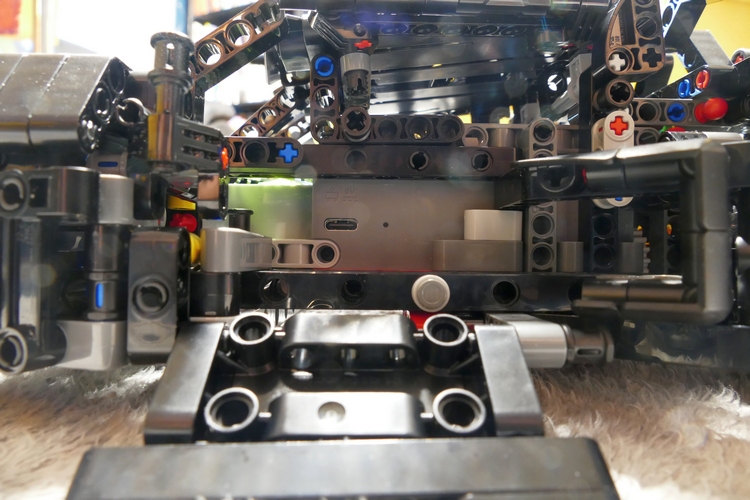
Furthermore, the set does not rely on a chassis that other components are built upon, but rather employs the large Control+ block as the main structural element of the entire body. This is more complex, but also more sophisticated, and during the building, it is particularly interesting to observe how the connections of the block are used for overall reinforcements. (To be clear, this is not an entirely new concept, but still somewhat rare in LEGO vehicles, and always a tricky one.)
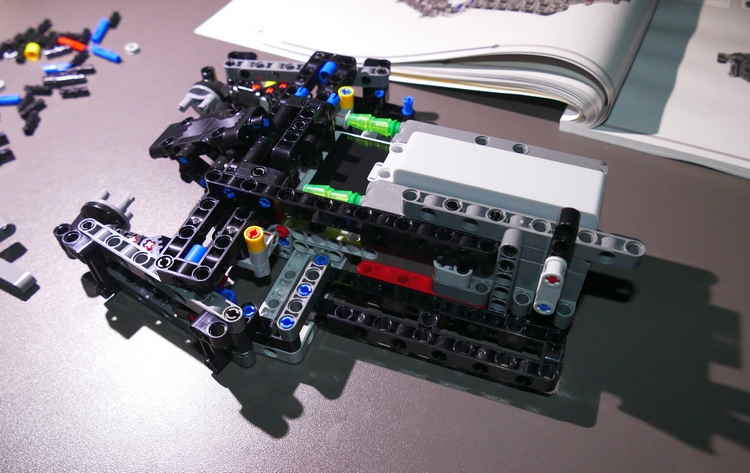
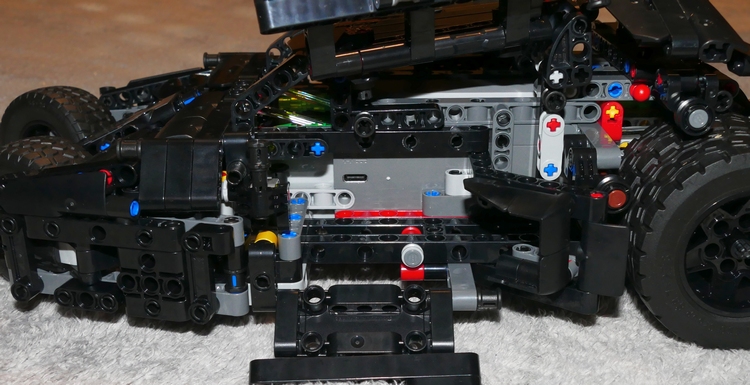
The presence of the Control+ block is a two-sided sword: the advantages are clear, with the model offering remotely controlled drive, steering and lighting, whereas the drawback is the very block’s considerable size which occupies a large share of the available volume in the vehicle of this scale. This, consequently, means that there was not a whole lot of space remaining to fit some more features, unless we count the openable door, to allow the battery being recharged, and the rear differential, which is a necessity more than a feature.
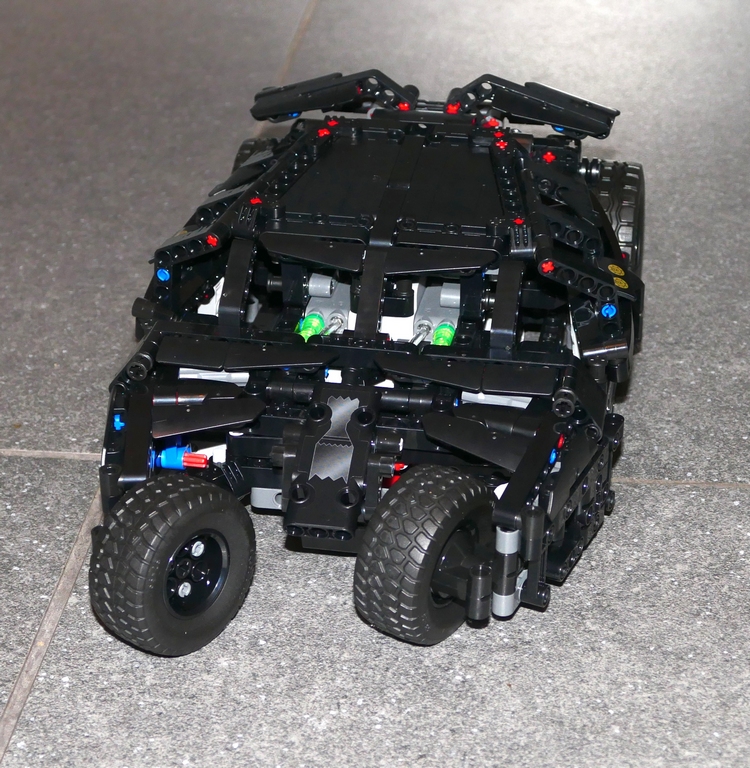
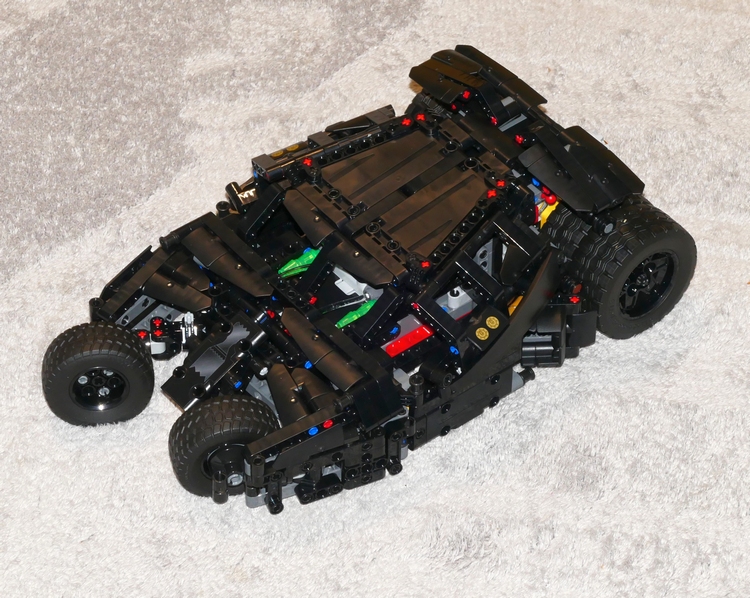
The overall look is quite similar to the original, to the extent allowed by pure, or almost pure Technic. You may find it handsome or you may find it ghastly, but true to the original it is. It was perhaps lucky that the Tumbler is so thoroughly black, increasing the spectrum of available parts for the designer.
As for the Tumbler’s main feature, that is - remote control, it works pretty much like most other similar sets. The speed is fine, the turning circle more than sufficiently narrow to race around one’s apartment, and it is fun. Don’t expect off-road performance, however: the floor (again, quite like the original) is quite low, and there is no suspension.
I won’t venture now in the general analysis of the Control+ concept and its role in LEGO Technic: legions of people, among which many, many are more competent than me, have already done so to great lengths. But I can at least say that, in this context which may include more Batman and DC Comics fans than Technic fans, it will work completely fine.
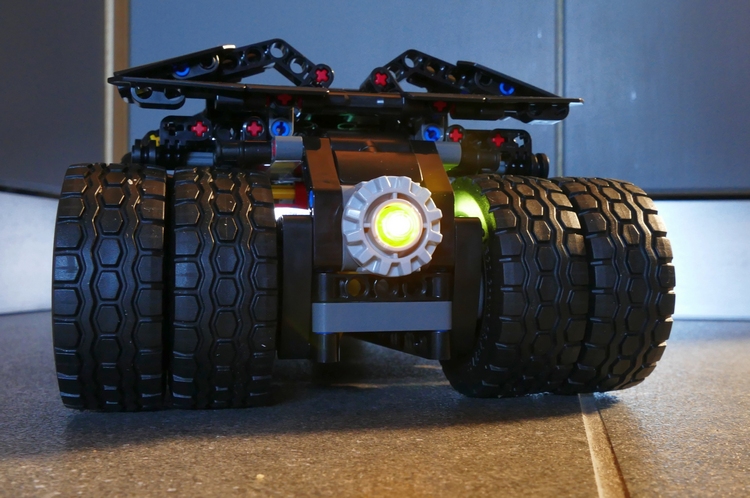
What I am more concerned about is the difficulty of building this Tumbler. Not that the steps are too hard - there are perhaps a few that require some attention but not extraordinarily so - but rather the physical process itself. Maybe it has something to do with the early manufacturing series, with the overwhelmingly black parts, or with some other factor; but building it, I often found parts’ resistance against connecting a little too high. The pins were mostly fine, but often the axles (either as usual axles or as axle pins) required significant force to fit into axle holes in panels and various other parts. Several times I resorted to placing a part axle-down against the table and slamming it from above to make it fit, because the required force to get the axle into its hole was simply annoyingly and unusually high. And while I am no Superman (or Batman, more adequately), I suppose I’m not an extremely weak person either: I can usually build Technic sets without having to take a rest afterward. An unusual remark, I know, but I am certain I was not hallucinating.
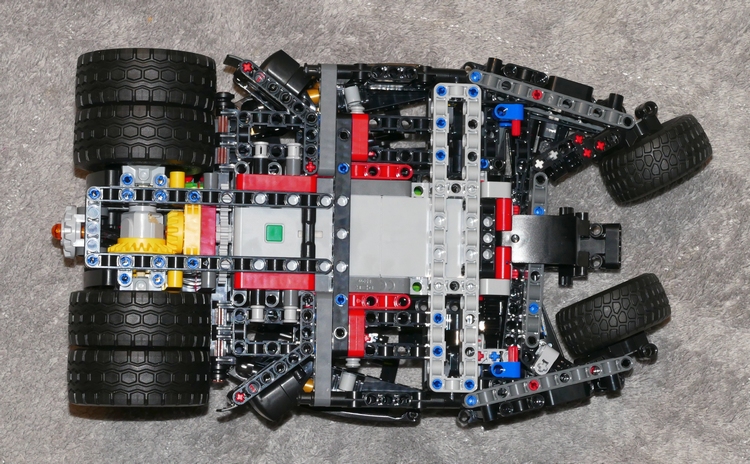
The positive consequence of it is that the Tumbler is quite sturdy, including the aforementioned complex linkages of the steering mechanics. And it will typically hit the obstacles with the front wheels first, helping a little with absorbing the impact.
From the parts source standpoint, this set entirely revolves around the Control+ module. It is vastly more expensive than sets of comparable size and number of parts (the currently popular 1:16 cars, e.g.), and if you are not really interested in the Control+, it will be a significant additional expense which you could do without. Not that the other parts are to be ignored: there is a whole lot of useful material in the most universal of all colors (black, obviously), including 6 wheels and panels of many types. But it all comes back to the starting question: whether you need the Control+. If yes, this is one of possible ways to obtain it along with 700+ useful Technic parts.
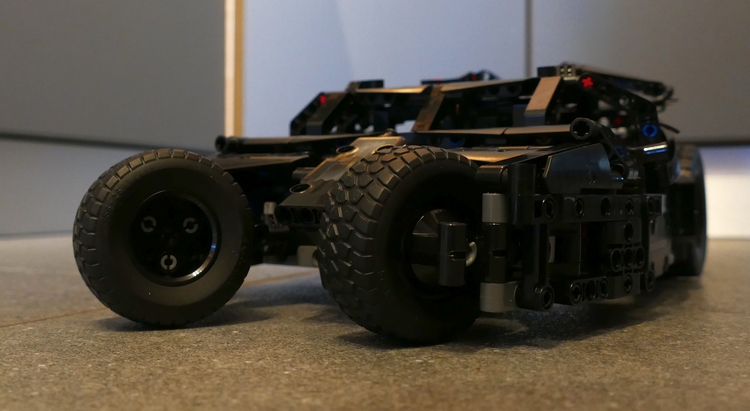
These considerations play an important role in summarizing overall impressions about the Tumbler. Clearly, it will be of interest for DC Comics fans and, even more, Batman fans. Otherwise, it may be a good choice if you are planning your own foray, but not a too complex one, into remotely controlled Technic vehicles. The Control+ block allows exactly that. Old school purists may (and often will) complain about its over-integration and simplification, but the fact remains: it doesn’t take enormous experience to build a functional remotely controlled vehicle with Control+, and that may just be the key value of this set - if you plan to disassemble it at build something else, that is. Instead of keeping it on your shelf.
We thank the LEGO Group for sending us this set for a review. However it did not goad us in any way, and all the opinions stated above are purely our own.
Number of parts: 719
Age rating: 12+
Dimensions: 31 x 17 x 11 cm
33747