
Set Review ➟ LEGO® 71481 Izzie’s Dream Animals

It took a while for LEGO to effectively deliver on the potential of the Dreamzzz line. While all of the sets imply alternate builds, mostly they deliver little in terms of any real alternative with only some relatively insignificant changes. This set changes that. With this set LEGO delivers three different animals—a red panda (which looks like a cat to me, but whatever), a bird, and a turtle—where, from a parts perspective, two of the three included parts bags are employed in effecting changes in the model. This is as opposed to, say, one of six bags worth of parts being used in other Dreamzzz models. So a big cheer is warranted.
The set does come with stickers, but they are minimal, and I have not applied them to the model for this review.

Minifigures Izzie and Dizzy are detailed front and back on their torsos, both have two sided prints on the heads, Dizzy’s legs are printed on the front and Izzie’s legs are printed on the front and sizes. Izzie also sports a cloth cape.


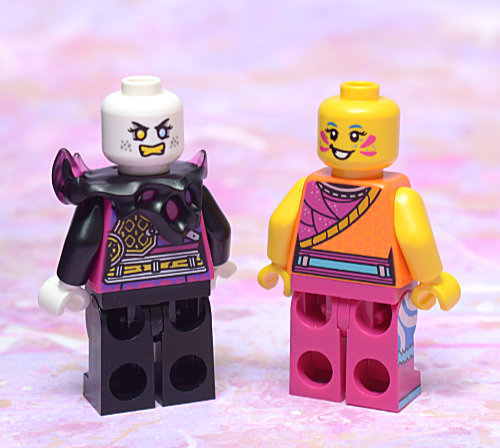
Other figures include a raven, dreamling, and a red panda.

Getting to the dream animals, all builds start with a core egg-shaped torso assembly. From there, things get…uh…wild.
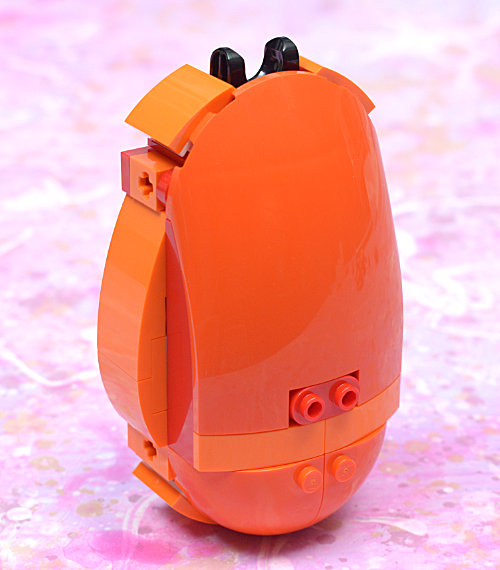

Red Panda
For purposes of this review I am going to refer to this build as “cat” because red pandas have short stubby legs…this model does not…and cat is faster to type than red panda.
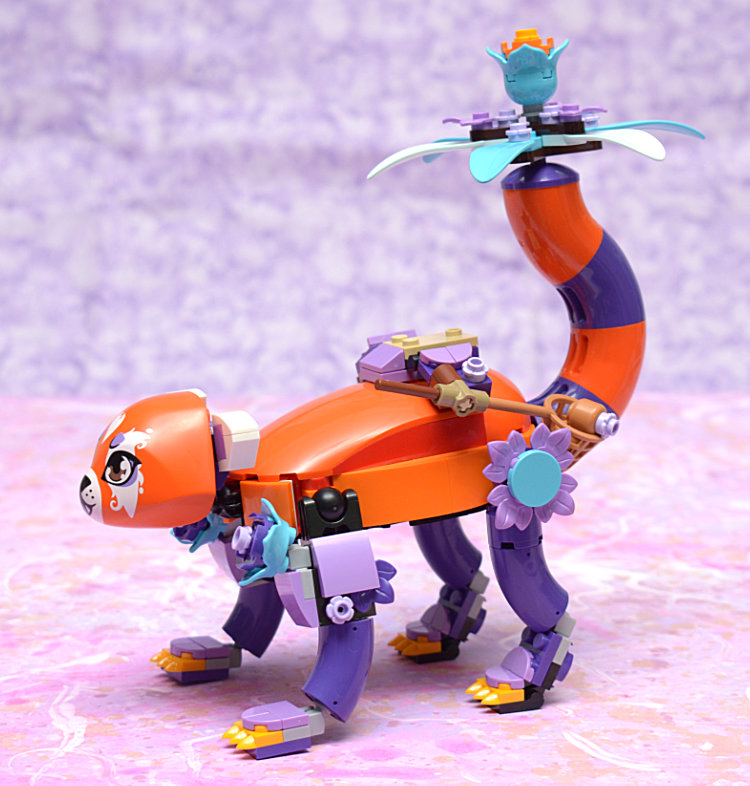
The first note of interest with cat is the arm and neck connections. The arms use an axle and closed technics ball connector where the neck uses a stopped axle and an open technics ball connector.

While the neck assembly is secure, the arm assembly has problems. If the arm is rotated such that the socket connector hits part of the body, the end of the socket acts as a fulcrum and pulls the ball connector off the axle.
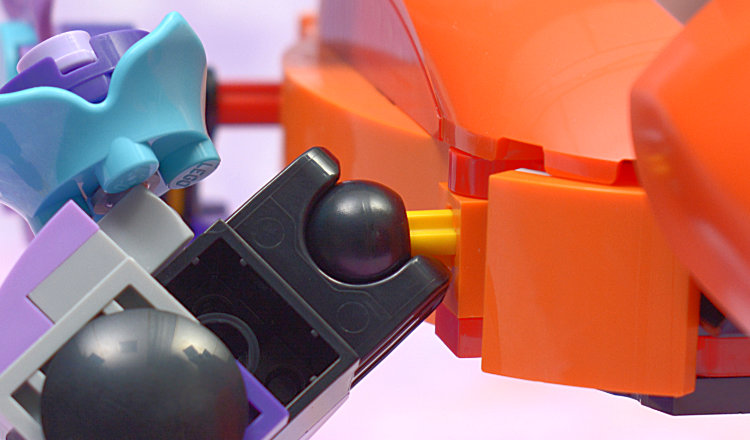
During the photo shoot for the review, the arms fell off the cat so often that serious cursing commenced and I looked for an alternate solution. The head connection was not problematic, so why not use that type of assembly for the arms? Sure enough, swapping out the closed ball and axle for a stopped axle and open ball solved the problem.
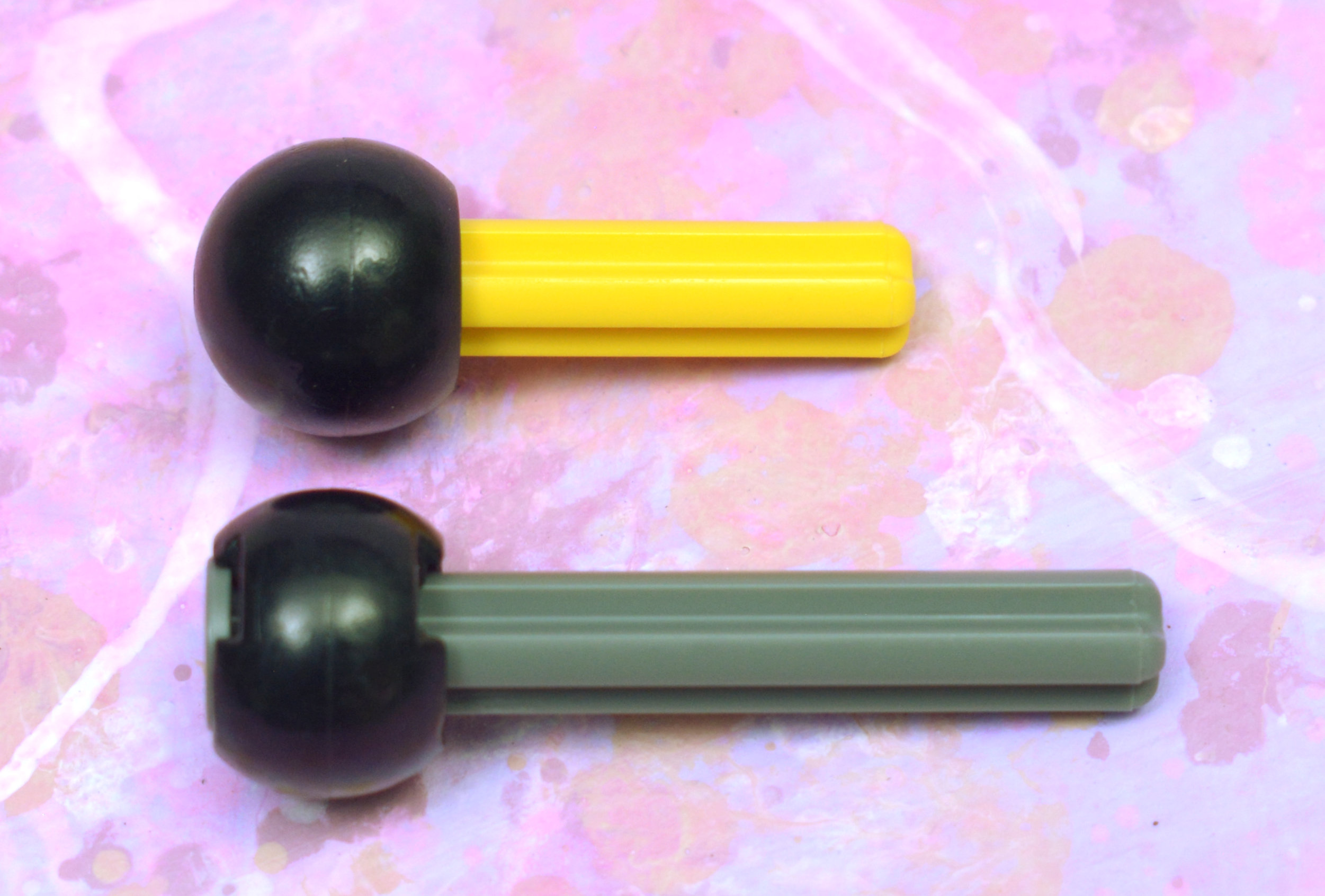
Arm connector assembly, top, and neck connector assembly, bottom.
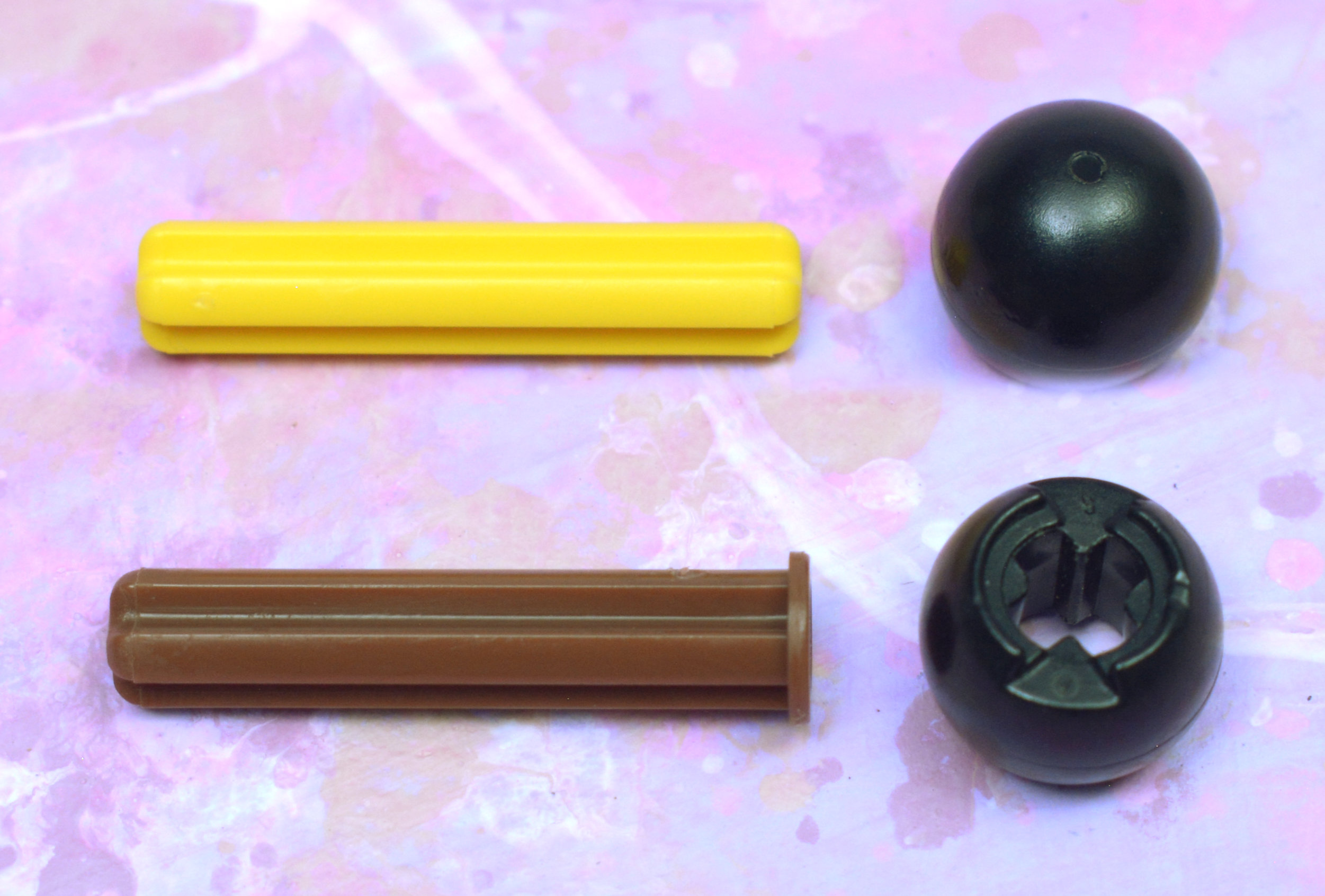
Arm connector parts provided, top, and arm connector parts suggested, bottom.
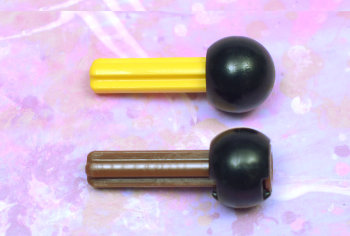
Suggested assembly is effectively the same size as the provided.
I don’t know why LEGO opted for the two different ball-and-socket options in the model other than perhaps aesthetics.

The model’s connection.
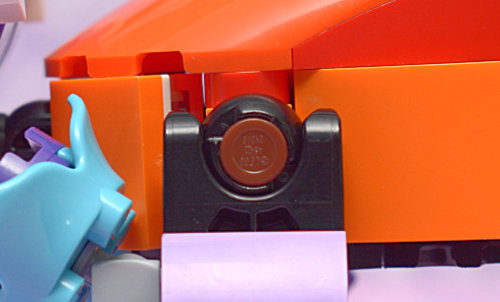
The author’s revised connection.
In a differently functionally challenged attachment strategy, the back legs and tail are attached with a fixed axle.

This provides three options for positioning the cat: with the legs position below the body the cat can either (1) stand on all fours or (2) recline onto the tail, and with the legs in the back-towards-the-tail position the cat can (3) stand. The back legs cannot be positioned towards the head or above the body.


Ultimately there is very little alternate positioning available for the cat, being that the back legs are effectively fixed in place and the front legs want to either fall off or, because of limited positioning possiblities, make the cat face-plant.
Cat’s front paws are simple and attached by a small ball-and-socket assembly. As such they can be positioned in most any direction. Cat’s back paws are additionally jointed, allowing for veritable infinite array of dramatic positions that strikingly contrast with the absolute absence of dramatic positioning of the legs.

Front paw.
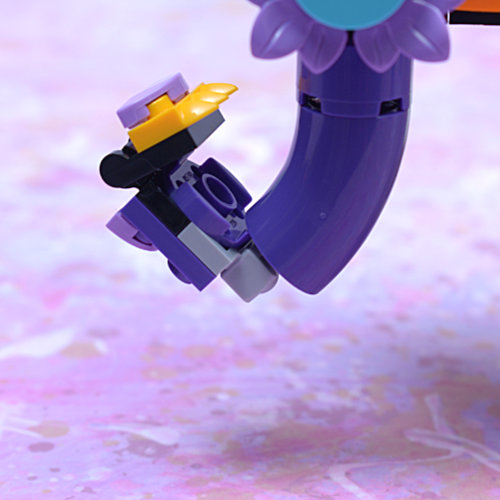
Back paw up.

Back paw back.

Back paw forward.
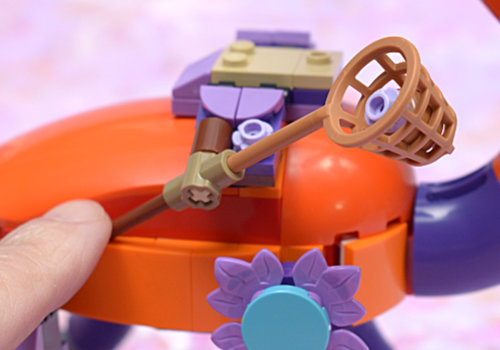
Cat has a saddle with folding sides and an attached basket catapult. The catapult has a good range of motion for throwing the little flowered ball bombs.


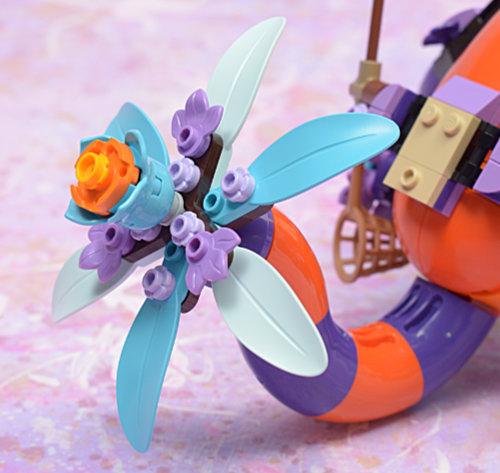
Cat’s tail is capped with a flower propeller. Two three-arm propeller pieces slide over a bar and are secured with another small bell shaped flower assembly. The two propeller pieces do not join to one another, they simply nest one on top of the other. As such the propeller assembly spins freely.


As the cat model uses most of the parts in the set, the side builds for the cat are a modest couple of flowers and a MacGuffin.

Bird

While cat has limited viable pose options, bird has fewer. Well. Bird has effectively one. Ish.
Bird flips the body egg orientation in the build, making bird large-breasted as opposed to fat-assed. This makes bird top heavy, and not in a pleasant Dolly Parton way. Bird has to be pretty specifically posed, with particular care given to the feet position, for bird to balance on two legs. With the feet positioned less-bent to the leg such that the weight of the model rests on both the feet and the heels of the legs there is slightly more stability.

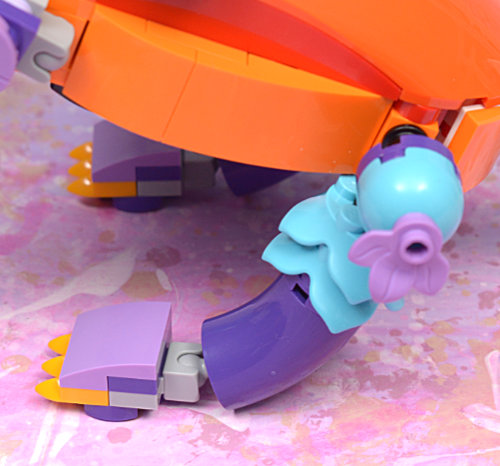
If you want to fudge a bit and position the wings downward such that they touch ground and become effectively front arms, then you will have a four-legged balanced bird. Otherwise bird is wobbly, very wobbly.


Bird’s head is attached with a small ball-and-socket. This allows for full movement down and rotationally. Up movement is limited due to the head interfering with the body and side-to-side movement is limited due to head side feathers bumping into the body.

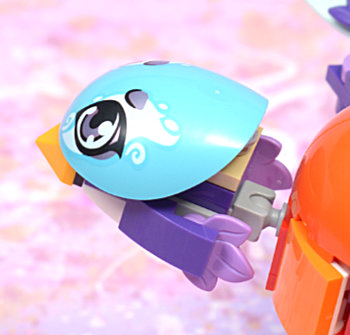
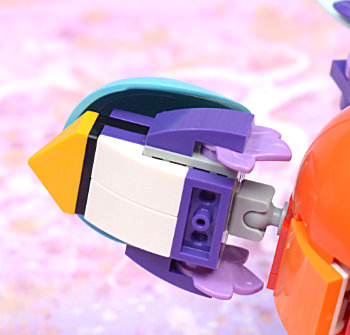
Bird wings are attached with small ball-and-sockets. There is limited side-to-side movement, nearly full 180 degree flap movement, and 360 degree rotation, so wings can be positioned in many poses.
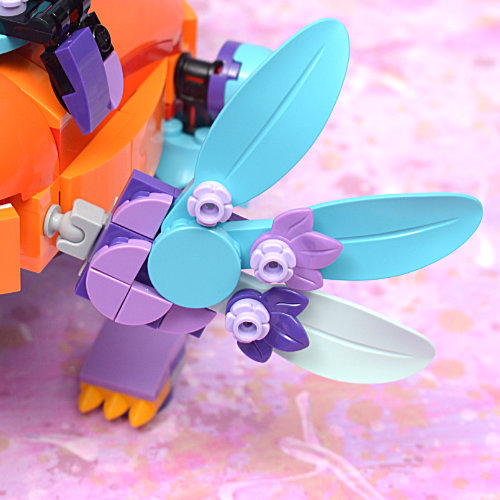
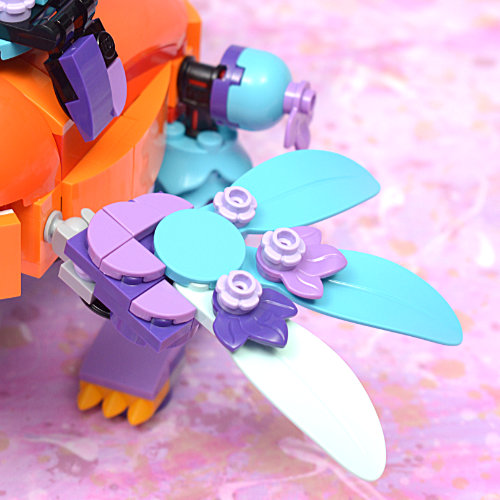
Bird’s tail also has lots of down and rotational movement with little up and side-to-side possible.
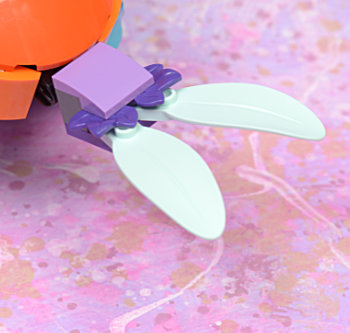


As with cat, bird has a saddle with movable side flaps. Unlike cat, bird’s seat has a raised back and side and eliminates the basket catapult.
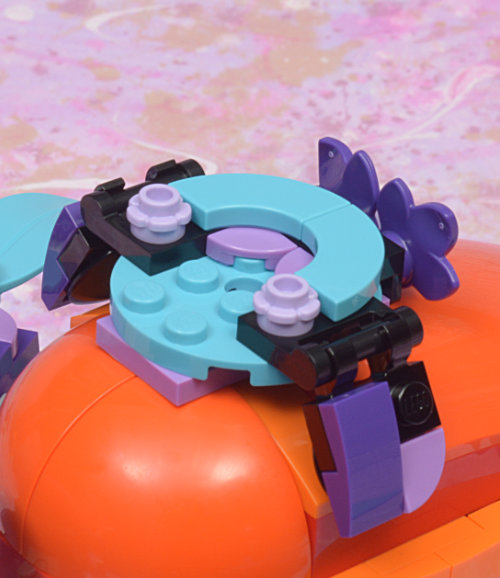
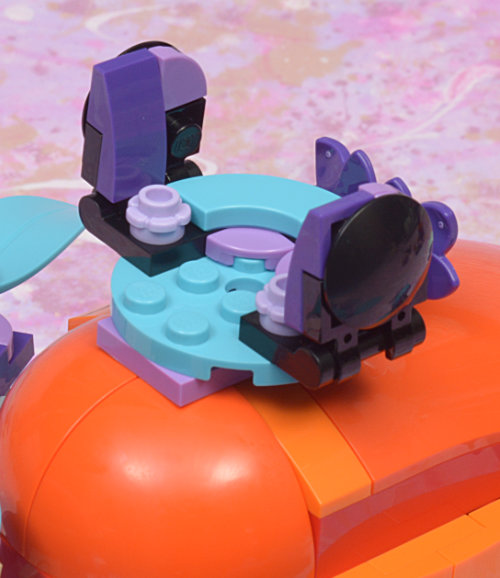
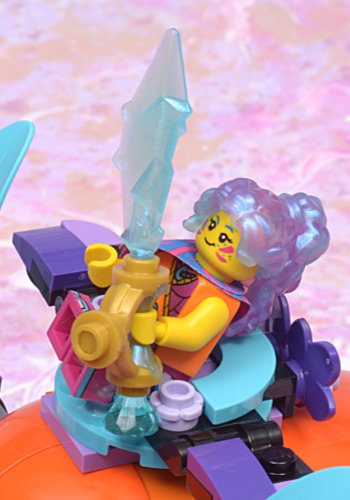
The raised sides on the seat prevent Izzie from positioning her arm down at her side. She has to have arms forward, especially if holding her weapon, otherwise the seat arm and the minifigure arm are at odds.


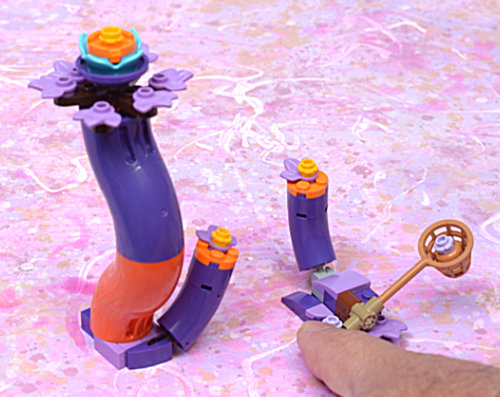
The curved cylinders used as the large tail and front legs on the cat are used in the side builds for bird, becoming sort of worm flowers. The larger flower repeats the spin functionality of the propeller assembly from the cat’s tail. The smaller flower gets a modified basket catapult assembly with a shorter push arm. Of note here is that where cat’s catapult had about 60 degrees of movement, this catapult has only about 30.

Turtle
Turtle appears to be a sea turtle, given that turtle seems to have flippers and not legs.

Turtle’s head is attached with a duo of large and small ball-and-socket connectors. This provides for an extended range of positioning. While the head can not retract into the shell as could a real turtle, the assembly does make for fairly turtle-like movement.


Turtle’s front fins are attached with the large ball and socket as were the front legs of cat. However, with turtle, a bushing is added between the body and the ball, which moves the fin assembly away from the body and allows for greater positioning options. I am still finding that one of the balls does not want to stay attached to the axle.


Turtle’s back fins are attached with small ball-and-socket connectors and allow for a wide range of positioning.

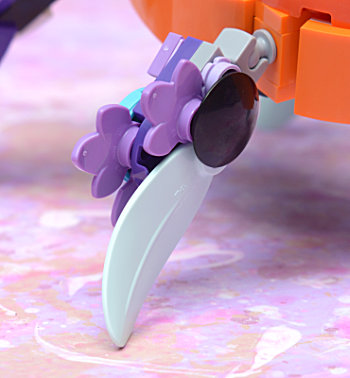

Turtle’s tail attached with a small ball-and-socket connector and allows for a wide range of positioning.

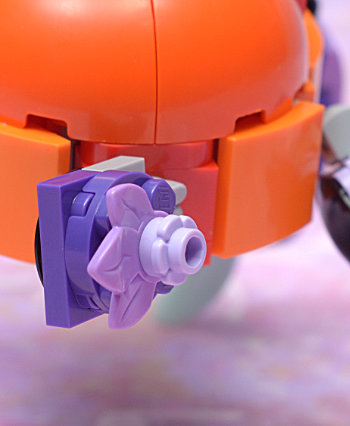
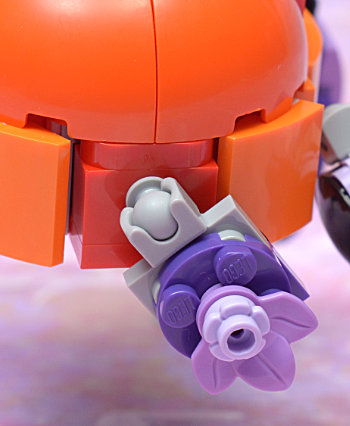
Not to be left out, turtle also has a saddle. A flower bomb thing is attached to either side with a single small clip so they can easily be detached and thrown at a sibling to poke an eye out. Or maybe they are supposed to be jets. Going the other saddles one better, turtle’s saddle has a moveable flower tail.


Turtle’s side builds are virtually the same as bird’s side builds. The tube flowers add a few parts an the bases are slightly different. The change of the base on the catapult—the pin holder piece is literally just rotated 180 degrees from its orientation in the bird build—is to its detriment as the angle of movement is reduced to a measly ten degrees. This means the bombs pretty much get catapulted vertically and it becomes a “don’t shoot ’til you see the whites of their eyes” situation…which in this case is about the width of your hand.

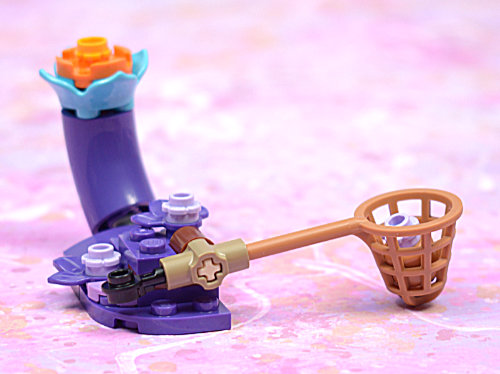
Catapult at rest.

Catapult at full extension.
The Randolph T. Fielding Absolutely Administrivia Section
Aside from figure elements, the printed parts in the set are limited to the panda head, birdturtle head and the MacGuffin tile.

Heads for Izzie and Dizzy are part 3274.
The white and orange on the little panda figure are dual molded and the legs and face detail are painted black.


Clutch (lack of) Power
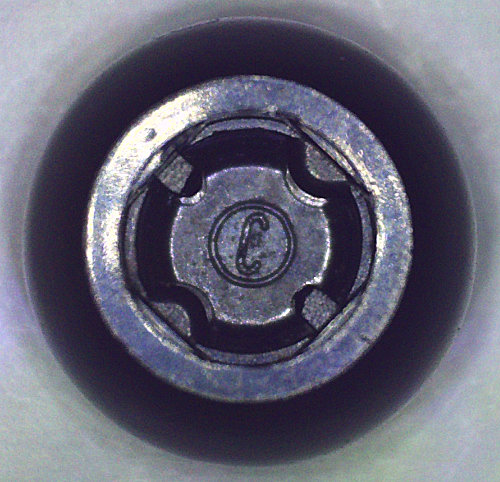
The ball connector’s refusal to stay attached to the axle vexed me to the point I got out the microscope to see what, if anything, was going on with that. And, what do you know, two different molds. I examined the two balls included with the set and another half dozen I had. This is what I found: the balls with the © marking were all loose and the balls with the LEGO logo all held fairly snugly. There is a difference in the ribs on the inside of the axle socket; the © balls had a small rounded rib and the logo balls had a small pointed rib.

One other assembly of note that seemed to have a weak point (and there were others) was on the turtle’s large fins. The SNOT assembly kept coming off the main assembly. This was held by three studs. Light pressure on the assembly when I was repositioning the fin for photography, hey, and when just moving the model for that matter, the part would come off. Please note this is different than the ball connector which would slide off of its on volition; this disassembly did require some contact. But it was pretty much (1) fin falls off (2) go to pick up fin, fin comes apart.


I have noted in other reviews that some assemblies are just something less than secure. The Milano model had all sorts of things that wanted to come off, there was the robot arm that had absolutely no clutch and spun freely on a bar, the Orient Express had single stud connections and the roof sections were very problematic…these are examples that come to mind.
Whatever is going on with the models, be it design or parts production issues, I hope LEGO can get a handle on it sooner rather than later. Ultimately for me as a consumer it is just disappointing. Spend $40 on a set and the arm won’t stay attached. I think that is fairly significant.
Summary
I paid for this set with my own money, this was not a review set from LEGO. I would say that I am relatively happy with the set from a three-in-one perspective. I would be happier if the model stayed together. There would be some play value here if the model didn’t literally have sections fall off with little or no provocation. The model would have more play value if the legs were not fixed. Final takeaway on this set is not the fun of building it or the imagination that went into its design. The lasting memory is that it falls apart. It is unfortunate. Now, granted not everyone is going to get a box with one © ball and one logo ball, but sad be the person getting a copy with two © balls.
And I am beginning to understand why, when I go to exhibitions, some big builders say they are starting to use a lot of third party bricks.
Postscript
As I went to put the model away, the arm fell off, dropped to the floor, and the SNOT subassembly came off. Again.
33668